

What are the Ultimate Hidden Secrets of Successful Self Storage Facility Management?
Successful self storage facility management comes down to three things: smart systems, trained staff, and happy tenants who keep renting month after month. Most facility owners think they need more units or a bigger marketing budget to grow. The real secret is much simpler than that. It’s about running tight operations so nothing falls through the cracks.
This guide breaks down what actually works on the ground floor of storage operations. You’ll learn what separates a facility that struggles to hit 70% occupancy from one that sits at 95% with a waitlist. No fluff, just the practical stuff that facility managers use every day.
What Top-Performing Facilities Do Differently
| Area | Struggling Facilities | Top-Performing Facilities |
| Occupancy Rate | Below 75% | 90%+ |
| Rent Collection | Manual, paper-based | Automated online payments |
| Move-In Process | 20-30 minutes, in-person only | Under 10 minutes, online option |
| Unit Pricing | Flat rate, rarely changed | Dynamic pricing based on demand |
| Delinquency Handling | Reactive, inconsistent | Automated reminders and workflows |
| Customer Communication | Phone/email only | SMS, email, and portal access |
| Gate Access | Manual codes, no tracking | Smart access control with logs |
Why Self Storage Facility Management Is Different From Other Real Estate
Storage isn’t like apartment leasing or office rentals. Tenants often never meet you face to face. They sign a lease online, drop off their stuff, and don’t come back for months.
This means your systems have to work without constant human oversight. A self storage facility manager needs tools that run in the background, not a checklist that requires daily babysitting.
The Role of a Self Storage Facility Manager
A facility manager wears many hats. On any given day, they’re handling tenant calls, chasing late payments, checking security cameras, and coordinating lock-outs for delinquent units.
The best managers aren’t the ones doing everything by hand. They’re the ones who know which tasks to automate and which ones need a personal touch.
How to Manage a Self Storage Facility Without Burning Out
Managing a self storage facility gets overwhelming fast if you’re relying on spreadsheets and sticky notes. Here’s what actually reduces the daily grind:
- Automate rent reminders so you’re not manually calling every late tenant
- Set up online payment portals to cut down on office visits
- Use gate access logs to spot suspicious activity before it becomes theft
- Track unit turnover so vacant units get filled faster
- Standardize your lien process so overdue accounts don’t linger for months
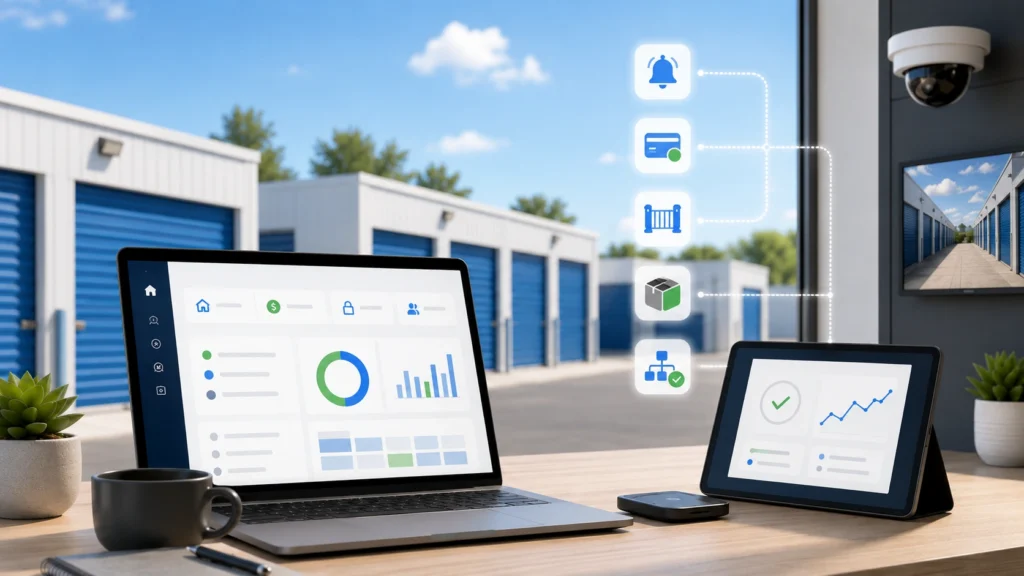
Facilities that skip automation end up with managers who spend 60% of their day on admin work instead of customer service or sales.
Self Storage Property Management Software Changes Everything
Here’s where most facility owners get it wrong. They think software is just for billing. It’s actually the backbone of your entire operation.
Good software handles reservations, payments, gate access, insurance sign-ups, and delinquency workflows in one place. When you use self storage property management software, you cut down on human error and free up staff time for things that actually grow revenue.
What to Look for in Storage Software
Not all platforms are built the same. Before picking one, check for these features:
- Online rental and e-signature capability
- Integrated payment processing
- Auto-lien and auction workflows
- Mobile app access for tenants
- Real-time occupancy and revenue reporting
- Integration with smart locks and gate systems
Training Your Team the Right Way
Self storage manager training isn’t just showing someone how to unlock a gate code. It covers sales conversations, conflict resolution, and understanding local lien laws.
Many facility owners skip formal training and just throw new hires into the deep end. This backfires because untrained staff often quote wrong prices or mishandle delinquent accounts, which costs money later.
Core Training Topics That Matter
- State-specific lien and auction laws
- How to upsell insurance and moving supplies
- De-escalating tenant complaints calmly
- Proper documentation for damaged units
- Using the property management dashboard efficiently
Pricing Strategy: The Overlooked Profit Lever
Most facilities set a price and forget it. That’s a mistake. Storage demand shifts by season, by unit size, and by local competition.
Facilities in college towns see spikes every May and August. Facilities near retirement communities see steadier, year-round demand. Adjust your rates based on these patterns instead of guessing.
Simple Pricing Tactics
- Review competitor rates within a 5-mile radius monthly
- Raise rates slightly on existing tenants who haven’t moved
- Offer first-month discounts only for slower-moving unit sizes
- Track climate-controlled unit demand separately from standard units
Handling Delinquency Without Losing Tenants
Late payments are part of the business. How you handle them determines whether you keep a tenant or end up auctioning their unit.
A clear, consistent process protects your revenue and keeps things fair. Send a reminder at day 1, a notice at day 10, and a formal lien letter by day 30, following your state’s specific timeline.
Security and Access Control Basics
Tenants pick a facility based on how safe it feels. Cameras, lighting, and gate codes aren’t optional extras anymore, they’re expected.
- Install cameras at every entrance, exit, and hallway junction
- Use individual gate codes tied to each tenant’s account
- Set automated alerts for after-hours access attempts
- Keep perimeter lighting on motion sensors for energy savings
FAQs
Do I need software to manage a small storage facility?
Yes, even small facilities benefit from software because it reduces manual errors and saves hours each week. A facility with even 50 units can struggle with paper tracking once tenant turnover picks up.
How much training does a new storage manager need?
New managers typically need 2-3 weeks of hands-on training covering software, lien laws, and customer service. Ongoing training should continue quarterly to cover law changes and new features.
Can dynamic pricing hurt my tenant relationships?
No, dynamic pricing mainly affects new rentals rather than existing tenants if applied correctly. Most software lets you protect current tenants from sudden spikes while adjusting rates for new move-ins.
What’s the biggest mistake new facility owners make?
The biggest mistake is delaying software adoption until problems pile up, like missed rent payments or overbooked units. Starting with the right systems from day one prevents months of cleanup work later.
Conclusion
Running a profitable facility isn’t about one big fix. It’s about stacking small improvements in pricing, training, security, and software until they compound into real results. Self storage facility management works best when every part of the operation talks to each other instead of running in silos.
Start with the piece that’s costing you the most time right now, whether that’s manual rent collection or inconsistent delinquency handling. Small changes in your daily workflow add up to major gains in occupancy and revenue over a year. Facility owners who treat this as an ongoing process, not a one-time fix, are the ones who stay ahead of local competition.

Leave a Reply