
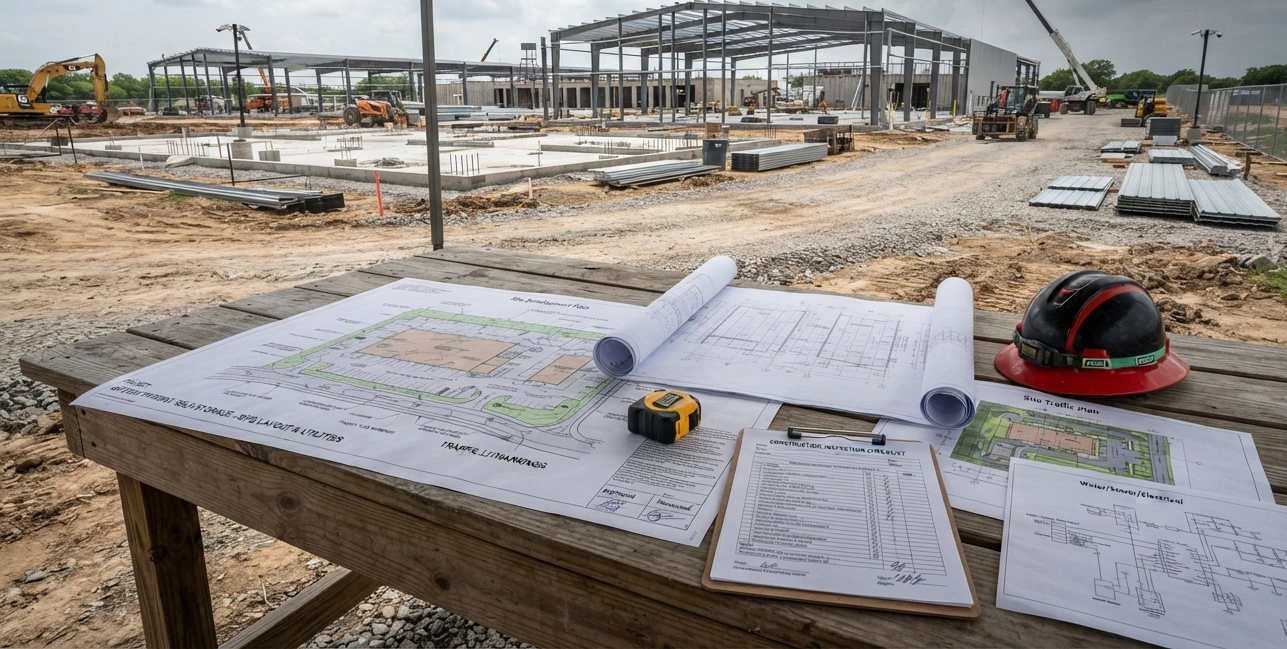
How Does Smart Self-Storage Construction Management Prevent Expensive Operational Errors?
Smart self-storage construction management prevents expensive operational errors by catching design flaws, code violations, and unit-mix mistakes before they turn into six-figure fixes. Facility owners who skip proper planning often end up with poor drive aisle widths, wrong climate-control placement, or security blind spots that cost thousands to correct after opening. Good self-storage construction management ties every phase, from site selection to final walkthrough, into one connected process. This keeps budgets on track and protects your investment for decades to come.
Most construction guides only cover permits and contractors. They skip the part where bad planning quietly drains your profits for years after the ribbon cutting. This article breaks down what actually goes wrong, how to stop it, and which tools help you manage the whole build without costly surprises.
Common Construction Errors vs. Smart Management Fixes
| Common Error | Cost Impact | Smart Management Fix |
| Wrong unit size mix | Lost revenue for 5-10 years | Market demand study before design |
| Narrow drive aisles | Retrofit costs $50,000+ | 26-30 ft aisle standard from day one |
| Poor climate control zoning | High utility bills, unit damage claims | HVAC load planning per building zone |
| No digital access system | Manual gate errors, theft risk | Integrated keypad and app access from build |
| Delayed inspections | Weeks of holding costs | Scheduled milestone inspections |
| Missing fire suppression code checks | Fines, forced shutdowns | Code compliance audit at blueprint stage |
Why Construction Planning Mistakes Get Expensive Fast
A small design error looks cheap on paper. Once concrete is poured or steel is up, fixing that same error costs five to ten times more.
Self-storage construction management catches these problems during the design phase, not after move-in day. This is the biggest difference between owners who profit in year one and those who spend year one fixing avoidable mistakes.
Site Selection Errors That Haunt Owners Later
Poor site selection creates problems no amount of good management can fully fix later.
- Flood zone locations that raise insurance costs
- Low traffic visibility that hurts lease-up speed
- Zoning restrictions discovered after land purchase
- Soil conditions requiring expensive foundation work
Local market data and traffic studies should happen before you sign any land deal, not after.
Self-Storage Construction Management Cuts Design Waste
Self-storage construction management works best when it connects design decisions to real operational data. Owners who guess at unit mix based on gut feeling often build too many large units and not enough small ones, or the reverse.
A proper feasibility study looks at local competitor occupancy rates, income levels, and household size trends. This data shapes the unit mix before a single wall goes up. Getting this step right adds years of steady occupancy instead of empty units sitting unrented.
Unit Mix Planning Based on Local Demand
Every market has different storage needs. A college town needs more small units for dorm overflow. A suburban area with larger homes needs more 10×20 and 10×30 units for furniture and vehicles.
Skipping this research is one of the most common and costly construction mistakes in the industry.
Technology Integration During the Build Phase
Adding smart technology after construction finishes costs far more than wiring it in during the build. Retrofitting access control panels, cameras, and climate sensors means tearing into finished walls.

Facility owners who plan technology early save on both labor and material costs. This is where a storage facility management system becomes part of the construction blueprint instead of an afterthought bolted on later.
Access Control and Security Wiring
Security gaps show up fast once tenants move in. Cameras placed in the wrong spots, gates without backup power, and units without individual alarms all lead to complaints and liability claims.
Wiring for these systems during construction, not after, avoids costly rework and keeps your facility compliant with insurance requirements.
Working With Self Storage Property Management Companies
Many owners bring in self storage property management companies only after construction wraps up. This is backwards. These companies understand tenant behavior, pricing trends, and unit demand patterns that should shape your build from the start.
Bringing operational expertise into the planning stage means your finished facility matches what renters actually want, not just what looks good on a blueprint.
Budget Planning That Includes Post-Construction Costs
Many construction budgets stop at the ribbon cutting. Smart owners plan for the first six months of operational costs too.
- Software setup and staff training
- Insurance policy adjustments for the new facility
- Marketing spend for lease-up period
- Maintenance reserve fund
Compliance and Inspection Scheduling
Missed inspections cause the most expensive delays in self-storage builds. Fire marshals, building code officials, and ADA compliance checks each have their own timeline.
Self-storage construction management software or a dedicated project manager keeps these inspection dates mapped against your construction schedule. Missing one inspection window can push your opening date back by weeks, costing thousands in holding costs and lost rental income.
Common Code Violations to Watch For
- Fire lane width not meeting local fire code
- Missing ADA-compliant units near ground floor entrances
- Electrical panel access blocked by unit walls
- Insufficient lighting in interior hallways
How Data-Driven Construction Management Protects ROI
Owners who track construction data against operational goals see fewer surprises after opening day. This means comparing planned unit mix against actual local demand data every quarter during the build, not just once at the start.
A storage facility management system set up before construction finishes lets you track occupancy projections, pricing models, and maintenance schedules from day one. This head start often means faster lease-up and fewer pricing corrections in your first year.
What Makes a Facility Truly Future-Proof?
Future-proofing means building for technology and demand changes you haven’t seen yet.
- Wide conduit runs for future tech upgrades
- Flexible unit walls that can be resized later
- Solar-ready roof structures
- Extra bandwidth capacity for smart locks and sensors
Skipping these details now means expensive retrofits in five to ten years when tenant expectations shift.
FAQs
Does self-storage construction management really save money?
Yes, it saves money by catching design and code errors before construction locks them in place. Fixing a mistake during planning costs a fraction of fixing it after the building is finished.
How early should I hire a property management company?
You should bring in self storage property management companies during the design phase, not after construction ends. Their input on unit mix and tenant demand shapes better building decisions from the start.
What is the most common construction mistake owners make?
The most common mistake is choosing unit sizes based on guesswork instead of local market data. This leads to empty units in some sizes and waiting lists for others.
Can technology be added after construction finishes?
Yes, but it costs significantly more than wiring it in during the build. Retrofitting access control and security systems means cutting into finished walls and ceilings.
Conclusion
Smart self-storage construction management is the difference between a facility that profits from day one and one that bleeds money fixing avoidable mistakes. Every phase, from site selection to final inspection, connects directly to your long-term operating costs and tenant satisfaction. Owners who bring in market data, technology planning, and property management expertise before breaking ground avoid the six-figure errors that plague rushed projects. The upfront work costs less time and money than fixing problems after tenants have already moved in.
Treat construction planning as an investment in decades of smooth operations, not just a checklist to finish fast. Partner with experienced teams, use the right software tools, and schedule inspections early to protect your budget. A well-managed build sets the foundation for steady occupancy, lower maintenance costs, and stronger returns for years ahead.

Leave a Reply