

Which Self Storage Software Has the Best Prices Locally?
The self storage software with the best local prices is one that matches your facility size, waives setup fees, and charges based on unit count rather than a flat enterprise rate. Facility owners searching for which self storage software has the best prices often overpay because they compare sticker prices instead of total cost per unit. Pricing varies widely between small single-site operators and multi-location REITs. This guide breaks down real pricing tiers, hidden fees, and what “best price” actually means for your market.
Small operators need different tools than large chains. A facility with 200 units doesn’t need the same features as one with 2,000. Matching software tier to facility size is the first step toward finding true local value.
Self Storage Software Pricing Comparison
| Facility Size | Monthly Price Range | Best For | Setup Fee |
| Under 150 units | $50–$120/mo | Single-site owners | Often $0 |
| 150–500 units | $120–$300/mo | Growing operators | $0–$500 |
| 500–1,000 units | $300–$600/mo | Multi-building sites | Varies |
| 1,000+ units | $600+/mo | Multi-location chains | Custom quote |
Prices shift based on payment processing fees, online rental modules, and access control add-ons. Always ask for a total monthly cost, not just the base license fee.
What “Best Price” Really Means
A low sticker price doesn’t always mean the best deal. Some vendors advertise cheap base plans, then charge extra for:
- Online move-ins
- Gate access integration
- SMS or email reminders
- Payment processing
- Customer support tiers
The real comparison is total monthly spend per unit, not the headline number.
Which Self Storage Software Has the Best Prices for Small Facilities
Small facility owners usually get the best deal from software built specifically for independent operators. Platforms like 6storage.com offer flat, transparent pricing without forcing you into enterprise bundles. This matters most for owners running one or two sites who don’t need multi-region reporting tools.
Look for vendors that offer:
- No long-term contracts
- Month-to-month billing
- Free trial periods
- Transparent per-unit pricing
Owners searching for a budget friendly storage system software should confirm the quote includes online rentals and tenant billing, not just the core dashboard.
Hidden Costs That Change the Real Price
Many facility owners get quoted a low base price, then discover added charges later. These hidden fees are common across the industry.
- Payment gateway fees – often 2.5% to 3% per transaction
- Training charges – some vendors bill hourly for onboarding
- Data migration fees – moving from spreadsheets or old software
- API access fees – needed for integrations
- Access control hardware sync fees – required for gate systems
Ask every vendor for a full breakdown before signing. A verbal quote is not a contract.
Regional Price Differences Across the US
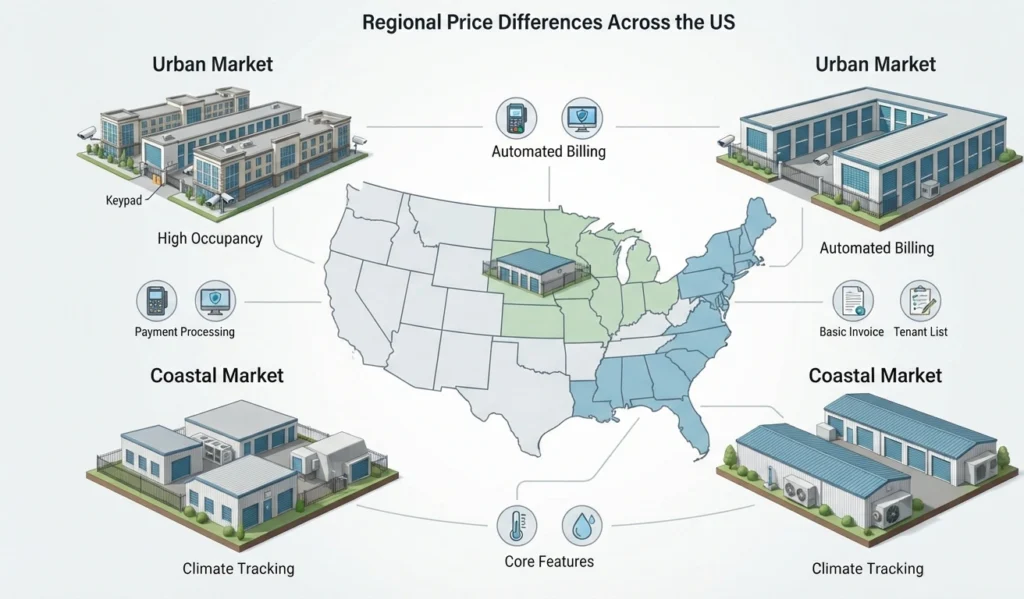
Software pricing doesn’t change much by state, but local market conditions affect what owners are willing to pay. High-competition metro areas often need more features, which pushes the effective price up.
- Urban markets: higher unit turnover means owners need automated billing more
- Rural markets: basic plans usually cover full operational needs
- Coastal markets: climate-controlled unit tracking adds a small cost bump
Knowing your local market helps you avoid paying for features you won’t use.
Security Add-Ons and Their Price Impact
Access control is one of the biggest price variables in self storage software. Cloud-based gate and door systems often cost extra per door or per unit.
Facilities using integrated security tools, such as 6Security cloud-based access control, typically pay a small monthly add-on instead of a large hardware investment. This keeps monthly costs predictable for smaller operators.
Before comparing vendors, ask:
- Is access control billed per door or per facility?
- Does the price include mobile app unlock features?
- Are firmware updates included at no extra cost?
New Owner Pricing Considerations
New facility owners face a different cost structure than established operators. Startup budgets are tighter, and every dollar matters in the first year.
New owners should review a detailed breakdown like how much self storage software costs for new owners before signing any contract. This helps avoid overpaying during the riskiest phase of a new business.
Key first-year cost factors:
- Free trial length
- Whether setup is self-service or vendor-assisted
- Contract cancellation terms
- Scalability pricing as units fill up
How to Compare Quotes the Right Way
Don’t compare vendors by memory or gut feeling. Use a simple side-by-side method.
Step 1: List every vendor’s base monthly price.
Step 2: Add payment processing fees.
Step 3: Add access control or hardware sync fees.
Step 4: Add training or migration costs.
Step 5: Divide the total by your unit count.
This final number is your true cost per unit. It’s the only number that matters when deciding which self storage software has the best prices for your specific site.
Signs a Vendor Is Overcharging You
Watch for these red flags during price negotiations:
- Vendor refuses to give a written quote
- Contract locks you in for 3+ years
- Setup fees exceed one month of service
- No free trial or demo period offered
- Support is only available through paid tickets
Any of these signs should trigger a second opinion before signing.
Final Pricing Checklist for Facility Owners
Before choosing software, confirm these details in writing:
- Monthly base price
- Setup or onboarding fee
- Payment processing rate
- Access control add-on cost
- Contract length and cancellation terms
- Support response time guarantee
FAQs
Is cheaper self storage software always worth it?
No, cheaper software isn’t always worth it if it lacks online rentals or automated billing. Missing features often cost more in staff time than the software savings.
How much should a small storage facility pay for software monthly?
Small facilities under 150 units typically pay between $50 and $120 per month. This range usually covers core management tools without extra hardware fees.
Do most storage software vendors charge setup fees?
Not all vendors charge setup fees, and many waive them for smaller facilities. Always ask directly since this isn’t always listed on pricing pages.
Can I switch software providers without losing tenant data?
Yes, most reputable vendors offer data migration support during onboarding. Confirm this service is included before signing a new contract.
Does access control always cost extra?
Yes, cloud-based access control is usually billed as a separate add-on. Costs depend on the number of doors or gates connected.
Are free trials common in this industry?
Yes, many self storage software companies offer 14 to 30-day free trials. Use this period to test billing and tenant communication tools fully.
What’s the average contract length for storage software?
Most contracts run month-to-month or annually, with month-to-month being more common for smaller operators. Avoid vendors pushing multi-year lock-ins.
Is payment processing included in the base software price?
No, payment processing is almost always billed separately as a percentage fee. This typically ranges from 2.5% to 3% per transaction.
Do new facility owners get special pricing deals?
Some vendors offer discounted first-year rates for new facility owners. It’s worth asking directly, since these deals aren’t always advertised publicly.
Conclusion
Finding which self storage software has the best prices comes down to matching your facility size to the right pricing tier and reading every line of the quote. Small operators usually save the most with flat, transparent pricing plans built for independent sites. Hidden fees for payment processing, access control, and training can quietly double your real monthly cost. Use the comparison table and checklist above before signing any contract.
Take time to request full written quotes from at least three vendors. Calculate your true cost per unit, not just the base price. This simple habit protects new and established owners from overpaying. A little research now saves real money every month going forward.

Leave a Reply