
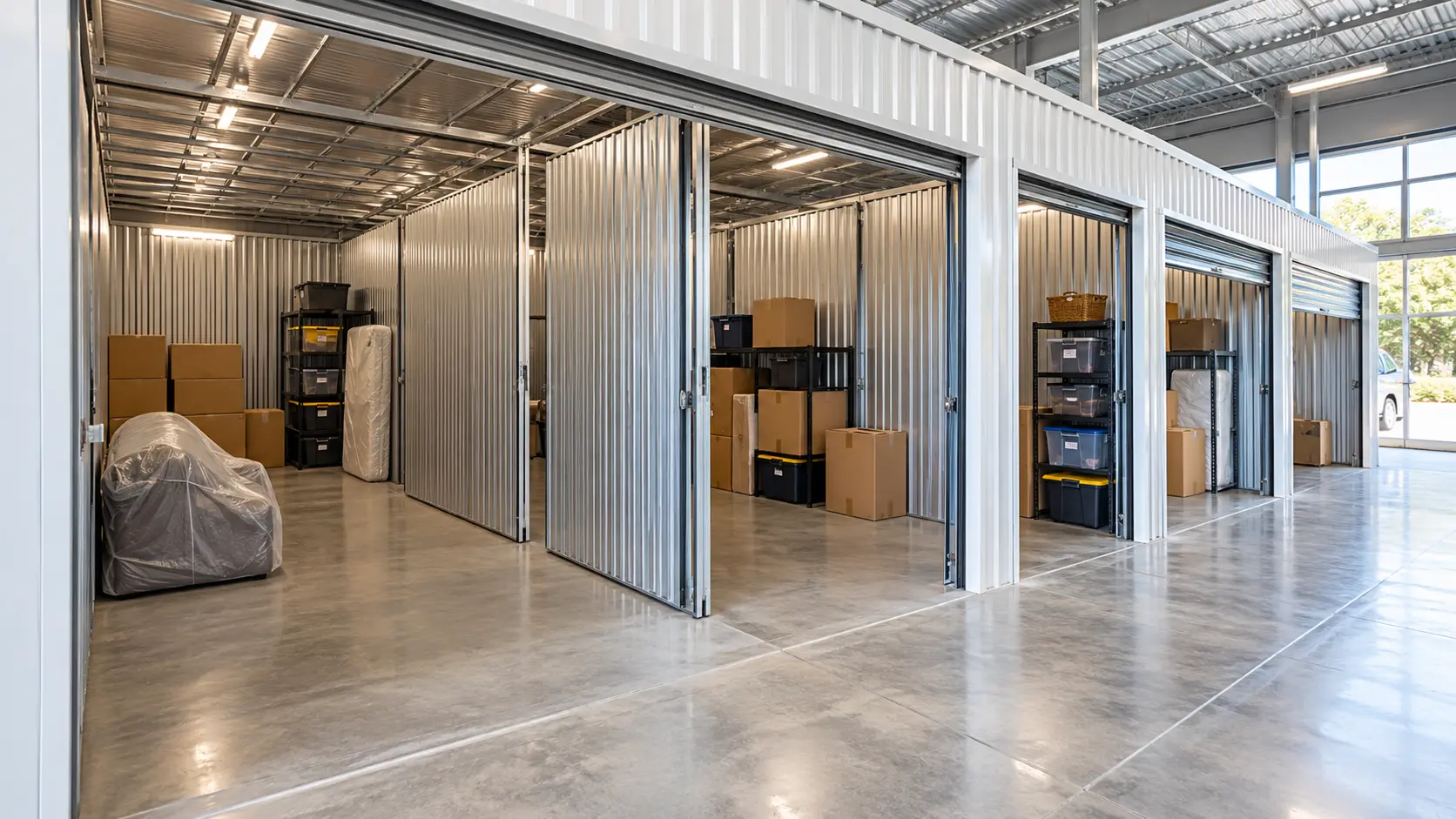
Customizing Storage Unit Configurations: Modular Layouts and Convertible Sizes
The best way to customize storage unit configurations is to build modular layouts with movable walls and convertible sizes that you can change as demand shifts. This lets you split one 10×20 into two 10×10 units in a single day, with no rebuild. It also protects your income when local renters suddenly want smaller spaces. Facility owners who plan for change keep units rented while rigid layouts sit empty.
Tenant needs shift with seasons, home sales, and small business growth. Your unit mix should shift with them. Self storage management software shows which sizes rent fast and which ones sit vacant. This guide covers layout types, conversion steps, pricing, and the data behind each choice.
Layout Types at a Glance
| Layout Type | Best For | Conversion Time | Upfront Cost | Revenue Impact |
| Modular steel partitions | Frequent size changes | A few hours | Medium | High |
| Convertible wall panels | Small and mid size units | Half a day | Low to medium | High |
| Fixed masonry walls | Long term, stable demand | Weeks | High | Low |
| Modular climate controlled units | Indoor, high value storage | One day | High | High |
| Drive up with removable dividers | Vehicle, boat, and business storage | Several hours | Medium | Medium to high |
Why Flexible Layouts Beat Fixed Floor Plans
A fixed floor plan locks your income to the demand you saw on opening day. That demand rarely stays the same.
Seasonal Demand Swings
- Summer moves and college breaks push demand toward 5×10 and 10×10 units.
- Winter often brings business inventory and vehicle storage.
- Hot cities like Phoenix, Houston, and Dallas see steady demand for climate controlled units all year.
Unit Mix Gaps
A unit mix gap happens when your supply does not match what renters ask for. You may have ten empty 10×20 units and a waitlist for 5x10s.
Gaps drag down your occupancy rate and revenue per square foot. Flexible walls close those gaps without new construction.
Modular Storage Unit Layouts
Modular storage units use factory made panels that bolt together and come apart. They turn your building into a set of blocks you can rearrange.
Good flexible storage unit configurations for Texas facilities start with a 5 foot grid. Every wall, door, and light fixture then lines up with that grid, so changes stay simple.
Wall Systems
- Steel partition panels: strong, secure, and quick to move.
- Track mounted walls: slide into new positions on ceiling rails.
- Corrugated metal dividers: low cost, best for drive up rows.
- Insulated panels: needed for climate controlled sections.
Door and Corridor Planning
Doors are the hardest part to change. Choose roll up doors in standard widths so one door fits several unit sizes.
Keep corridors at a clear width that meets fire code. Plan your wiring, sprinkler heads, and cameras on the same grid as the walls.
Convertible Sizes That Rent Fast
Convertible sizes are units built from smaller blocks. Two 5×10 units can join to form a 10×10, and two 10×10 units can join to form a 10×20.
- 5×5: closets, seasonal items, and records
- 5×10: small apartments and dorm moves
- 10×10: one bedroom homes and small business stock
- 10×15: two bedroom homes and tools
- 10×20: full homes, vehicles, and large inventory
Smaller sizes tend to rent best near downtown areas, where apartments are tight. Your storage unit configurations should lean toward 5×5 and 5×10 in those neighborhoods.
Splitting and Combining Units
- Check vacancy by size in your software.
- Confirm that the neighboring units are empty.
- Move or remove the partition panels.
- Update unit numbers, dimensions, and door labels.
- Change the rate and the online listing.
- Test the lock, light, and alarm zone.
Planning Storage Unit Configurations for Higher Occupancy
Good layouts begin with data, not guesses. Pull your numbers before you touch a wall.
Read the Data
- Occupancy rate by unit size
- Average days vacant by size
- Waitlist and reservation counts
- Rental inquiries from your website and phone calls
- Competitor street rates within a few miles
Review examples of storage software to see how dashboards display vacancy by size at a glance.
Set Targets
Aim for a mix that matches local demand. A common starting point is more small units in dense areas and larger units in suburbs.
Review your unit mix every quarter. Small changes made often beat one large rebuild.
Pricing Each Configuration
A new size needs a fresh price. Compare the price per square foot across your sizes and against nearby facilities.
- Street rate: the listed price for walk in renters
- Web rate: often lower, used to win online searches
- Promotions: first month discounts for slow sizes
- Dynamic pricing: rates that rise or fall with occupancy
Software costs matter too. Check which self storage software has the best prices before you commit to a platform.
Software Support During Conversions
Self storage management software keeps every change in sync. When you resize a unit, the system should update your website, billing, and gate access at once.
Look for these tools:
- Unit mix reports by size and type
- Rate management with automatic rule changes
- Online rentals and move in forms
- Access control that matches new unit numbers
- Automated billing and tenant notices
Platforms like 6Storage bring these tools into one dashboard. That saves hours of manual updates after every change.
Handling Tenants During Changes
Never convert a unit with a tenant inside. Move the tenant first and give notice in writing.
Late payers add a second layer of work. Clearing locks fast once a balance is paid builds trust, so learn the steps for overlock removal after late payments.
Common Mistakes to Avoid
- Building walls that do not follow a standard grid
- Skipping fire code and permit checks
- Converting units before checking demand
- Forgetting to update online listings after a change
- Leaving old unit numbers in billing records
- Pricing new sizes with no local rate check
FAQs
Can you convert storage units without rebuilding?
Yes, if your walls are modular or panel based. You can move the panels, relabel the units, and update your system in a day. Fixed masonry walls need real construction.
Is a 10×10 the most profitable storage unit size?
No, profit depends on your market. A 10×10 often rents well, but 5×10 units can earn a higher rate per square foot. Compare your own numbers by size.
Should every facility offer climate controlled units?
No, not every market needs them. Hot, humid, or cold regions see the strongest demand. Check local demand before you pay for insulation and HVAC.
Are modular storage units cheaper than traditional builds?
Yes, they usually cost less over time. Panels can be reused and moved, which cuts rebuild costs. The first purchase price may be close to a standard build.
Can self storage software track unit size changes?
Yes, good software lets you edit unit dimensions, rates, and listings in one place. It also keeps billing and access records in line. Always test the change on one unit first.
Do I need city approval to change unit layouts?
Yes, in many areas. Local building and fire codes often cover corridor width, sprinklers, and exits. Call your city office before you start.
Should I review my unit mix every quarter?
Yes, a quarterly review catches problems early. Look at vacancy by size, waitlists, and competitor rates. Seasonal markets may need a check every month.
Can I rent a combined unit as one online listing?
Yes, once you merge the units in your software, they appear as one listing. Update the photos, size, and price right away. Remove the old listings so renters do not get confused.
Is it worth converting drive up units to indoor units?
Yes, when renters in your area want climate control or added security. Check your vacancy and local rates first. The change costs more upfront but can raise your rate per square foot.
Conclusion
Flexible layouts keep your facility earning as demand changes. Modular walls, standard grids, and convertible sizes let you act in hours instead of months. Pair them with clear data on vacancy, waitlists, and local rates. Then price each size with care and update every listing right away.
Start small with one row of convertible units, then track results for a quarter. If the numbers improve, expand the method across the building. Smart storage unit configurations in your local market and strong software work together to lift occupancy and income. Your next vacant 10×20 could become two rented units by the end of the week.

Leave a Reply