
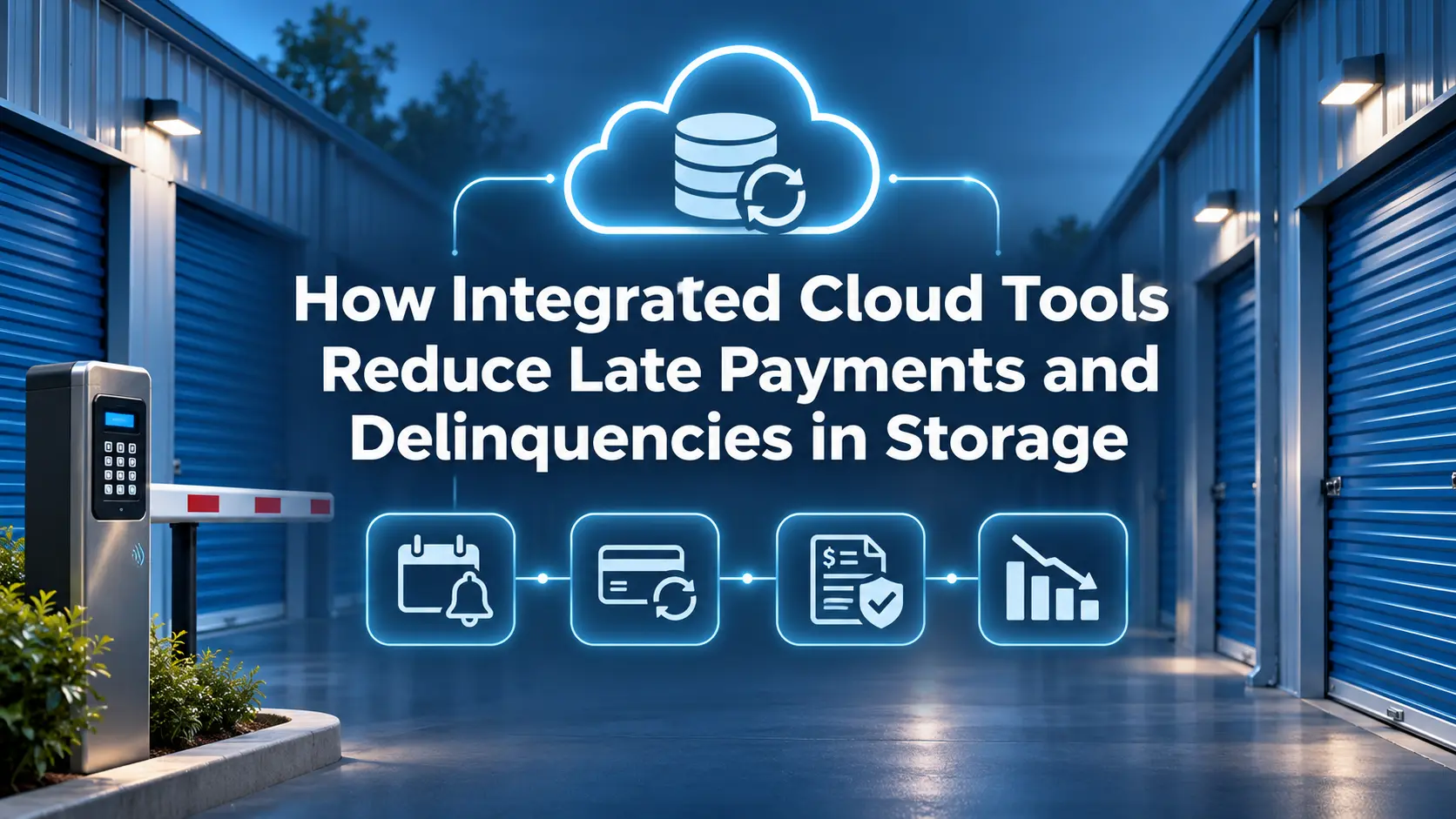
How Integrated Cloud Tools Reduce Late Payments and Delinquencies in Storage?
Cloud tools reduce late payments by automating reminders, autopay, and lien steps inside one connected system. Facility owners who still chase rent by phone lose hours and cash every month. Delinquent tenants often pay late because nobody reminds them or makes paying easy. A cloud based platform fixes both problems before a balance turns into a lien.
Modern self storage management software links billing, tenant records, gate access, and messaging. Each tool reacts to the same account data in real time. A missed due date triggers action within minutes, not days. This guide covers the features, workflow, and metrics that cut delinquency.
Late Payment Problems and Cloud Fixes at a Glance
| Late Payment Problem | Cloud Tool Fix | Business Result |
| Tenants forget the due date | Automated SMS and email reminders | Fewer past due accounts |
| Manual card entry each month | Autopay and recurring billing | Steady monthly cash flow |
| Slow follow up on overdue rent | Rule based late fees and notices | Faster collection |
| Delinquent tenants keep gate access | Auto lockout through gate integration | Stronger payment pressure |
| Paper lien paperwork | Digital lien and auction workflow | Lower legal errors |
| No view of account health | Delinquency dashboards and reports | Better decisions |
Common Causes of Delinquency in Storage
Most late rent comes from process gaps, not bad tenants. Fixing the process fixes most of the problem.
Manual Billing Gaps
Spreadsheets and paper ledgers create missed invoices and wrong balances. A tenant who gets a late or incorrect bill often delays payment. Errors also make it harder to enforce fees.
Slow Follow Up
A manager with a full day of rentals and walk ins rarely calls every overdue tenant on time. Each day of delay lowers the chance of full payment. Small balances grow into lien candidates.
Limited Payment Options
Tenants who can only pay in the office or by phone pay later. People expect to pay from a phone at any hour. Every extra step adds friction.
How Cloud Tools Reduce Late Payments at Every Stage
A connected platform acts at each point in the tenant lifecycle. It starts at move in and continues through the lien process.
Move In Setup
Strong collections begin at the rental agreement. Digital lease signing captures a card or bank account on file. The tenant agrees to autopay and electronic notices at the start.
Before the Due Date
Scheduled reminders reach tenants by text and email before rent is late. A direct payment link removes the need to call the office. Many tenants pay within minutes of the message.
After the Due Date
The system adds late fees, sends notices, and flags the account without staff input. Managers see a clear list of who owes what. Time goes to the accounts that need a personal call.
Core Features That Cut Delinquency
The right self storage software bundles several tools. Each one targets a different cause of late rent.
- Autopay and recurring billing: Charges the card or bank account on the due date.
- Tenant portal and mobile app: Lets customers view balances and pay at any hour.
- Automated communication: Sends text, email, and letter templates on a set schedule.
- Rule based late fees: Applies fees consistently with no manual entry.
- Card updater tools: Refreshes expired cards to prevent failed charges.
- Delinquency reports: Shows aging balances by unit, tenant, and location.
Facilities that see how Cloud Tools Reduce Late Payments for multi location storage operators usually start with autopay and reminders. Those two features deliver the fastest gains.
Gate Access and Payment Integration
Gate integration turns an overdue balance into a clear action. The system can deny gate entry until the tenant pays. Once payment clears, access returns automatically.

This works through a shared database between the payment engine and the access control system. No staff member has to walk to the gate or change a code. Tenants learn quickly that paying on time keeps access smooth.
Online rent payments also support this process. The tenant pays from a phone and regains access in minutes. That convenience speeds up resolution for good tenants who simply forgot.
Step by Step Delinquency Workflow
A written workflow keeps every overdue account on the same path. Cloud software runs most of it automatically.
- Day 1 to 3 past due: Send a friendly reminder with a payment link.
- Day 5: Apply the late fee and send a formal notice.
- Day 10: Restrict gate access and update the tenant record.
- Day 15 to 30: Send the pre lien notice with required legal wording.
- Day 30 and beyond: Move qualified units into the lien and auction process.
Timelines differ by state, so confirm each step with local law. Always set the system to match your state’s notice rules. A good platform stores signed proof of every notice sent.
Auto Lockout and Online Auctions
Digital lien tools protect owners from costly mistakes. They track notice dates, required wording, and tenant responses in one file. This reduces legal risk when a unit goes to sale.
Online unit auctions also shorten the final stage. Bidders see items online, and the system records the sale. Revenue returns to the facility faster than with a live event.
Metrics That Show Collection Progress
Reports prove whether the system works. Track a small set of numbers each month.
- Delinquency rate: Past due units divided by total occupied units.
- Days sales outstanding: The average time to collect rent.
- Autopay enrollment: The share of tenants on automatic payment.
- Cure rate: The share of overdue accounts that pay before lien.
- Late fee recovery: Fees charged compared with fees collected.
Reviewing these numbers each week helps managers spot trouble early. Dashboards in a cloud system make this a five minute task. Owners with several sites can compare facilities side by side.
Picking the Right Platform
Not every product handles delinquency the same way. Compare features against your real collection problems first.
Look at examples of storage software to see how different systems handle billing and access. Then check which self storage software has the best prices so cost matches your facility size. Review the future of self storage automation to confirm the vendor keeps adding tools. Operators who want a full overview can visit 6Storage for platform details.
Ask each vendor about these points:
- Payment processing fees and PCI compliance
- Gate and smart lock integrations
- Lien and auction support by state
- API access for other property management software
- Training and support hours
FAQs
Does autopay really lower delinquency in self storage?
Yes, autopay removes the need for tenants to remember a due date. Accounts on automatic payment rarely go past due unless a card fails. Pair it with a card updater to cut failed charges.
Can storage software lock out a tenant automatically?
Yes, if the software integrates with your gate access system. The gate denies entry once the account passes a set number of days past due. Access returns after payment clears.
How soon should I send a late payment reminder?
Send the first reminder one to three days before the due date, and another on the day rent is late. Early messages catch forgetful tenants. Keep the tone friendly and include a payment link.
Is it legal to charge late fees automatically?
Yes, in most states, as long as the lease states the fee and the amount follows local law. Some states cap fees or require a grace period. Check your state rules and set the software to match.
What is a normal delinquency rate for a storage facility?
There is no single standard, because rates vary by market and facility type. Many operators aim to keep past due units to a small share of occupied units. Compare your own numbers month over month.
Do tenants prefer text messages over email for payment reminders?
Yes, text messages usually get faster responses than email. Tenants often read them within minutes. Many facilities send both so no tenant misses a notice.
How do I reduce failed card payments?
Use a card updater service and send alerts before a card expires. Offer bank account payments as a backup. Retry failed charges on a set schedule.
Can cloud software handle lien notices and auctions?
Yes, many platforms store notice templates, track deadlines, and run online auctions. They also keep proof of mailing and tenant responses. Always review the templates with a local attorney.
Is cloud based storage software safe for tenant payment data?
Yes, reputable vendors use encryption and meet PCI compliance standards. Card data stays with the payment processor instead of your office computers. Ask each vendor for proof of compliance before you sign.
Conclusion
Late rent is a process problem, and automation solves most of it. Autopay, timely reminders, consistent fees, and gate lockout work best as a connected set. Each tool removes a manual task and shortens the time between a missed payment and action. Staff then spend their hours on rentals and customer service instead of collection calls.
Start with a clear workflow and measure it every week. Facilities that see how Cloud Tools Reduce Late Payments across regional storage portfolios gain steadier cash flow and cleaner records. Lower delinquency also protects occupancy and net operating income. Pick a platform that matches your size, and put autopay in place first.

Leave a Reply