
How Much Does It Cost to Open a Storage Facility Today?
Opening a storage facility costs between $1.5 million and $6 million for a new ground-up build, or as little as $500,000 to $2 million if you convert an existing building. The final number depends on land price, construction type, unit count, and your local market. Figuring out how much does it cost to open a storage facility starts with breaking down land, construction, permits, and technology into clear buckets.
This guide gives you real numbers, not vague estimates. You’ll see cost breakdowns, financing options, and the steps successful operators follow before opening day.
Self-Storage Startup Cost Breakdown
| Cost Category | Budget Range | % of Total Budget |
| Land Acquisition | $300,000 – $1,500,000 | 15–25% |
| Construction (per sq ft) | $25 – $70 | 40–55% |
| Permits & Zoning | $10,000 – $50,000 | 1–3% |
| Security Systems | $15,000 – $60,000 | 2–4% |
| Management Software | $100 – $500/month | Under 1% |
| Marketing & Website | $5,000 – $25,000 | 1–2% |
| Insurance & Legal | $10,000 – $40,000 | 1–2% |
| Working Capital | $50,000 – $200,000 | 5–10% |
These numbers shift based on your city, climate-control needs, and whether you build single-story or multi-story units.
Land and Site Costs Come First
Land is usually your biggest upfront expense. Prices swing wildly based on location and zoning status.
- Rural or suburban land: $50,000 to $300,000 per acre
- Urban or high-traffic land: $500,000 to $2 million per acre
- Pre-zoned commercial lots cost less in permitting fees later
Site prep adds another layer of cost. Grading, drainage, and utility hookups can run $50,000 to $200,000 depending on soil conditions.
Construction Costs by Facility Type
Construction pricing changes based on the building style you pick. Each option has a different price tag per square foot.
- Single-story traditional units: Metal buildings are cheapest, running $25 to $45 per square foot for basic drive-up units.
- Multi-story climate-controlled facilities: Cost more but command higher rent per square foot, typically $45 to $70 per square foot.
- Conversion projects: Renovating an old warehouse or retail space cuts costs sharply, usually $15 to $35 per square foot.
How Much Does It Cost to Open a Storage Facility With Financing?
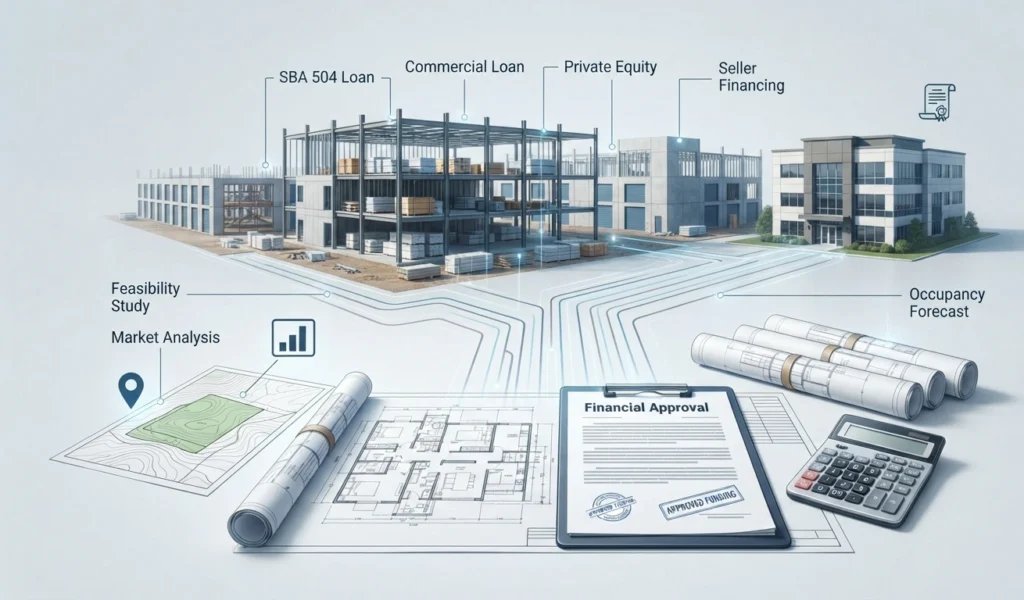
Most owners don’t pay cash upfront. Lenders offer several paths to fund a self-storage build.
- SBA 504 loans: Cover up to 90% of project costs with fixed rates
- Conventional commercial loans: Require 25–35% down payment
- Private equity partners: Trade ownership stake for capital
- Seller financing: Common for conversion or existing facility purchases
Lenders usually want a detailed feasibility study before approving funds. This study should show local demand, competitor rates, and projected occupancy.
Permits, Zoning, and Legal Fees
Zoning approval can take months and cost thousands before you break ground. Budget carefully so delays don’t drain your cash reserves.
- Zoning application fees: $2,000 to $10,000
- Environmental impact reports: $5,000 to $25,000
- Building permits: $5,000 to $20,000
- Attorney and legal review: $5,000 to $15,000
Some cities also require traffic studies for larger facilities. Check with your local planning office early to avoid surprise costs.
Security and Technology Setup
Renters expect strong security before they hand over their belongings. Skimping here hurts occupancy rates fast.
Basic security packages include:
- Gated access control systems
- CCTV cameras covering every hallway and entrance
- Individual unit alarms
- Digital keypad or app-based entry
Beyond physical security, your facility needs software to run daily operations. Owners who switch to cloud based facility management tools cut manual admin work and manage rentals, payments, and gate access from one dashboard, whether they’re overseeing a single site or several locations across a region.
Ongoing Operating Costs After Opening
Startup costs get most of the attention, but monthly operating expenses matter just as much for long-term survival.
| Monthly Expense | Typical Range |
| Property Management Software | $100 – $500 |
| Insurance | $500 – $2,000 |
| Utilities | $300 – $1,500 |
| Marketing | $500 – $3,000 |
| Staff (if applicable) | $2,000 – $6,000 |
| Maintenance Reserve | $500 – $1,500 |
Many new operators skip a dedicated marketing budget. That’s a mistake, since a strong website design directly affects how many renters find you online before touring competitor lots.
Ways to Lower Your Opening Costs
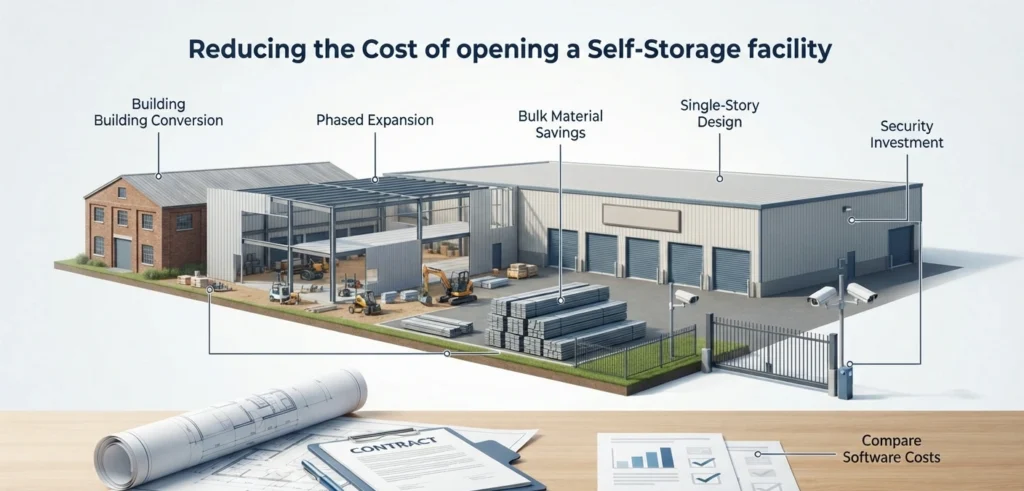
You don’t need the maximum budget to launch successfully. Smart operators trim costs without cutting corners on safety or renter experience.
- Convert an existing structure instead of building new
- Phase your unit construction in stages as demand grows
- Choose single-story over multi-story where land allows
- Negotiate bulk pricing on steel and security equipment
- Compare software pricing before committing to a platform
On that last point, checking which self-storage software has the best prices before signing a contract can save thousands over a multi-year term.
Protecting Your Investment and Your Tenants
Insurance costs matter, but so does tenant protection coverage. Many operators now offer this as an added revenue stream rather than treating it as pure overhead.
Facilities that bundle tenant protection plans into their leasing process often see fewer disputes over damaged or lost belongings. This builds trust with renters and adds a small recurring profit margin per unit.
Feasibility Study: Don’t Skip This Step
A feasibility study tells you if your market can actually support a new facility. Skipping this step is the number one reason self-storage projects fail.
Your study should cover:
- Population density and growth trends within a 3-5 mile radius
- Existing competitor occupancy rates and pricing
- Median household income in the service area
- Traffic counts near your proposed site
Spend $5,000 to $15,000 on a professional study before committing millions to construction.
FAQs
Is self-storage still a profitable business in 2026?
Yes, self-storage remains profitable due to steady demand from renters, movers, and small businesses. Profit margins often exceed 40% once a facility reaches stable occupancy.
What is the average ROI for a self-storage facility?
Most stabilized facilities see annual returns between 8% and 12%. Newer facilities in growing markets can see higher returns after the first three years.
Can I open a small storage facility with under $500,000?
Yes, converting an existing building on land you already own can bring startup costs under $500,000. Pure land purchase plus new construction rarely fits this budget.
How long does it take to build a self-storage facility?
Construction typically takes 8 to 14 months depending on size and weather delays. Permitting and zoning approval can add another 3 to 6 months before groundbreaking.
Do I need a real estate broker to find storage facility land?
No, but a broker familiar with commercial zoning can speed up your search significantly. Brokers also help negotiate prices and identify hidden zoning restrictions.
What size storage facility is most profitable per square foot?
Multi-story climate-controlled units usually earn the highest revenue per square foot. Small drive-up units cost less to build but generate lower rent per square foot overall.
How much land do I need to start a storage facility?
Most facilities need at least 1 to 3 acres for a mid-sized operation. Urban facilities sometimes fit on less than an acre using multi-story designs.
Is self-storage recession-proof?
Self-storage tends to perform well during downturns because downsizing and relocation demand rises. It’s not fully recession-proof, but historically it’s more stable than retail or office real estate.
Should I hire a management company or run the facility myself?
That depends on your experience and how many locations you plan to operate. Many single-site owners manage everything themselves using software instead of hiring a full management company.
Conclusion
Understanding how much does it cost to open a storage facility means looking past construction alone. Land, permits, security, software, and working capital all shape your final budget. Conversion projects offer a cheaper entry point, while ground-up builds demand more capital but often deliver better long-term returns. Run a feasibility study first, then match your construction style and financing plan to what your local market can support.
Every dollar you save on avoidable costs, like overpriced software or skipped competitor research, strengthens your opening cash reserves. Build a realistic budget, choose partners who help you operate efficiently from day one, and treat your first year as a foundation for scaling. Storage facilities that launch with strong planning tend to hit stable occupancy faster than those built on guesswork. Start with the numbers, not assumptions.

Leave a Reply